A mews house is a home built along a mews: a narrow, usually cobbled lane behind a grand London street or square. Mews houses were originally stables and coach houses, with horses and carriages on the ground floor and rooms for a groom or coachman above. Most were converted into homes during the twentieth century, and today they are among the most sought after houses in London.
The phrase is having a moment. After a mews house was used as a put-down on the Real Housewives of London reunion this week, plenty of viewers went looking for what one actually is. Here is the full answer, with a look at Belgravia, which has some of the finest mews in the city.
At a glance
| Mews house | |
|---|---|
| Originally built as | Stables and coach houses, with staff rooms above |
| When | From the early 1700s in London |
| Where | Narrow lanes behind grand streets and squares |
| Typical height | Two or three storeys, often extended with a basement or roof storey |
| Converted to homes | Mostly during the twentieth century |
| Belgravia and Knightsbridge | Around forty mews streets, the highest concentration of original mews in London |
| Value in Belgravia | Around £2,000 per square foot renovated |
What is a mews house?
A mews house is a former stable or coach house on a mews, the service lane that ran behind the big houses of Georgian and Victorian London. The ground floor held horses and carriages. The floor above was living space for the people who looked after them.
London’s mews began in the early eighteenth century. Grosvenor Square in Mayfair, laid out around 1720, was one of the first developments built with a complete network of mews lanes behind it, and the idea spread across the West End as new squares went up.
When cars replaced carriages, the stables became garages. London’s first petrol pump was installed in Queen’s Gate Mews, South Kensington, in 1913. By the middle of the twentieth century the horses had gone, and the mews were being turned into homes.
What does mews mean?
The word "mews" comes from the French "muer", meaning to moult. The King’s Mews at Charing Cross, established in the fourteenth century, was where the royal hawks were kept while they shed their feathers. After a fire in 1534 it was rebuilt as stables but kept its name, and from then on a mews meant somewhere horses lived. The name stuck to every stable lane that followed.
What does a mews house look like?
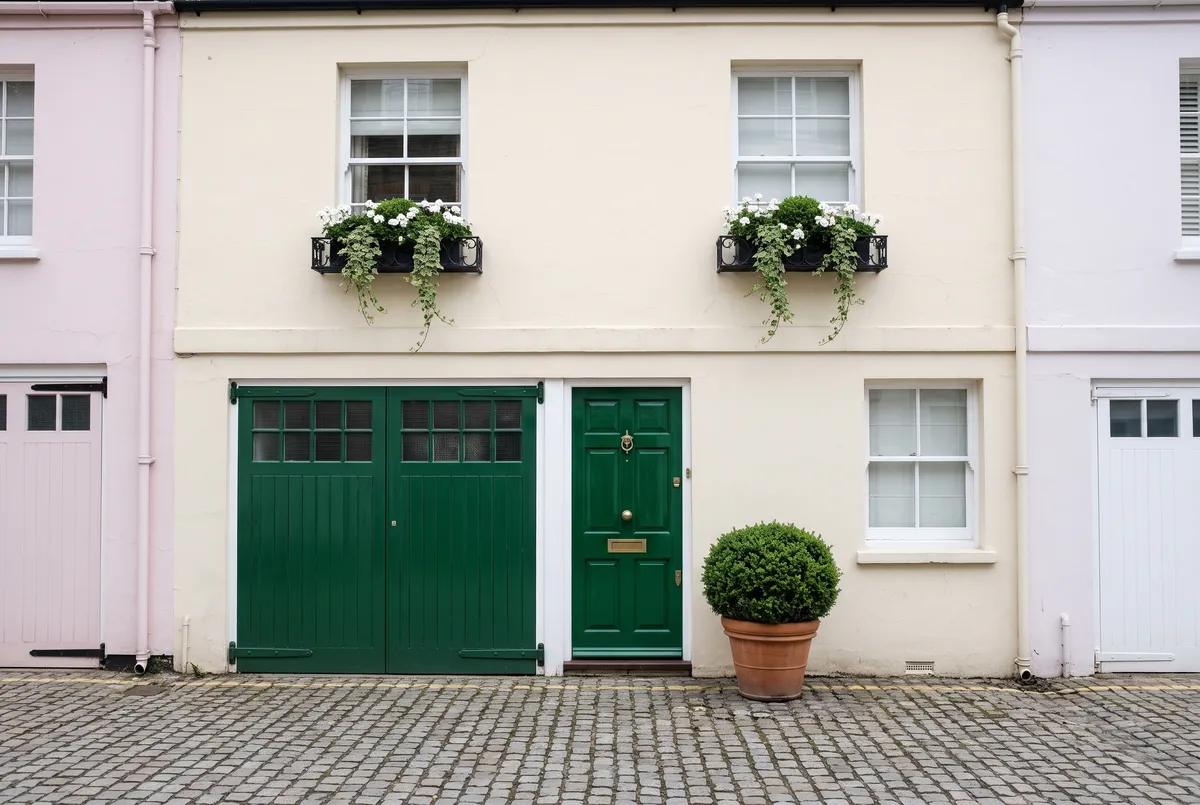
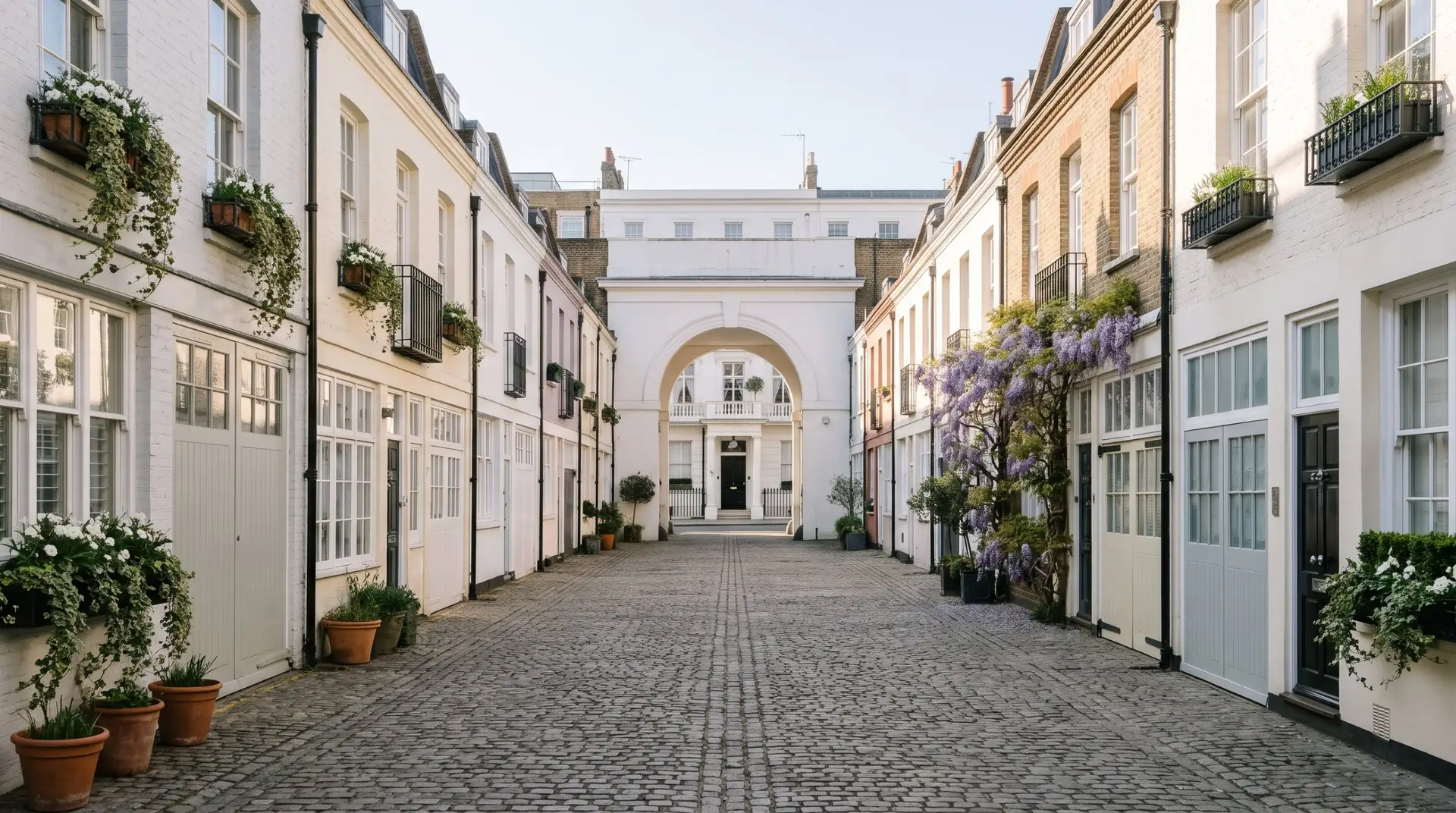
You can usually spot a mews before you see the sign. Look for:
- An archway at the entrance, often leading off a much busier street
- Cobbles underfoot and very little traffic
- Two or three storeys, built as a continuous terrace
- Wide ground floor openings where the carriage doors once were
- Window boxes and climbing plants instead of front gardens
Mews houses are often bigger inside than they look. Owners have added basements, roof storeys and terraces over the years, so a house that appears to have two floors from the cobbles may have four.
Mews houses in Belgravia
Belgravia was built on Grosvenor family land and takes its name from Belgrave in Cheshire, close to the family’s country seat. The builder Thomas Cubitt laid out much of it from the 1820s, beginning with Belgrave Square and Eaton Square. Every grand terrace needed stabling behind it, which is why Belgravia and neighbouring Knightsbridge together have around forty mews streets, the highest concentration of original mews in London.
The best mews in Belgravia
- Groom Place: twenty six period mews houses on a cobbled lane just off Belgrave Square. Since 2020 it has been home to Muse, a Michelin starred restaurant with just twenty three seats.
- Halkin Mews: a private cobbled cul de sac of seven houses off Motcomb Street, on the border with Knightsbridge.
- Eaton Mews North: a private cobbled mews running between Lyall Street and Eaton Place, behind some of Belgravia’s grandest terraces.
- Pavilion Road: often described as London’s longest mews, running parallel to Sloane Street and now pedestrianised, with independent food shops and cafes along it.
How much is a mews house worth?
Prices depend on size, condition and the street, but specialist mews agents put a renovated Belgravia mews house at around £2,000 per square foot. Houses that need work trade from around £1,500 per square foot, and the very best go above £3,000.
| Condition | Belgravia price per square foot | A 1,500 sq ft house |
|---|---|---|
| Needs work | from about £1,500 | from about £2.25 million |
| Renovated | about £2,000 | about £3 million |
| Exceptional | above £3,000 | above £4.5 million |
Larger houses with added basements, roof terraces and garaging go well beyond those figures. Mews houses for sale in Belgravia are rare, because the supply is fixed: no one is building new stables behind Eaton Square.
It was not always this way. In the 1960s and 1970s many London mews were run down, undervalued and at risk of demolition. The quiet, cobbled lanes and central addresses that made them unfashionable then are exactly what buyers pay for now.
Is a mews house a good place to live?
For many people, yes. A mews offers something rare in central London: a house rather than a flat, on a quiet lane with almost no traffic, minutes from the main streets. Buyers range from young couples and families to people wanting a London base they use part of the year.
The trade off is usually space. Original mews houses were built for horses and a groom, not a family, so many are compact, which is why so many owners have dug down or built up.
Seeing Belgravia’s mews for yourself
Walking the mews is one of the best ways to see Belgravia. A short loop:
- Start at Groom Place, just off Belgrave Square.
- Cross to Motcomb Street and look down Halkin Mews.
- Head south along Eaton Place, past the entrance to Eaton Mews North.
- Finish on Pavilion Road for a coffee.
It takes under an hour at an easy pace. Halkin Mews and Eaton Mews North are private, so admire them from the entrance.
Our Belgravia neighbourhood guide covers the rest of the area: the garden squares, the shops of Motcomb Street and Elizabeth Street, and where to eat.
Staying among Belgravia’s mews
You do not need to own a mews house to live among them for a while. MCR London’s Belgravia residences sit a few minutes’ walk from the mews in this guide, with full kitchens, separate living space and hotel grade housekeeping. Browse our serviced apartments in Belgravia, see the two bedroom apartment with a balcony, or for a month or more, our extended stay apartments.
Frequently asked questions
- What is a mews house?
- A mews house is a former stable or coach house on a mews, a narrow lane behind a grand London street or square. Horses and carriages were kept on the ground floor with a groom or coachman living above. Most were converted into homes during the twentieth century.
- What does mews mean?
- Mews comes from the French "muer", to moult. The King’s Mews at Charing Cross held the royal hawks while they moulted, and after a fire in 1534 it was rebuilt as stables but kept the name. Since then a mews has meant a lane of stables.
- How old are London’s mews?
- London’s mews date from the early eighteenth century. Grosvenor Square, laid out around 1720, was one of the first developments built with mews lanes behind it. Belgravia’s mews followed from the 1820s.
- How much is a mews house in Belgravia worth?
- A renovated Belgravia mews house is worth around £2,000 per square foot, according to specialist mews agents. Houses needing work start from around £1,500 and the best exceed £3,000, so a renovated 1,500 square foot house is worth about £3 million.
- Why are mews houses so expensive?
- They combine a house rather than a flat, a quiet traffic free lane and a central address, and the supply is fixed. In Belgravia and Knightsbridge there are only around forty mews streets.
- Are mews houses small?
- Original mews houses are often compact, because they were built for horses and a groom. Many have since added basements and roof storeys, so a house that looks like two floors from the street can have four.
- How many mews are there in Belgravia?
- Belgravia and Knightsbridge together have around forty mews streets, the highest concentration of original mews in London.
- Can you walk through Belgravia’s mews?
- Many are open. Groom Place and Pavilion Road are easy to walk through. Others, including Halkin Mews and Eaton Mews North, are private, so look for signs and view them from the entrance.